


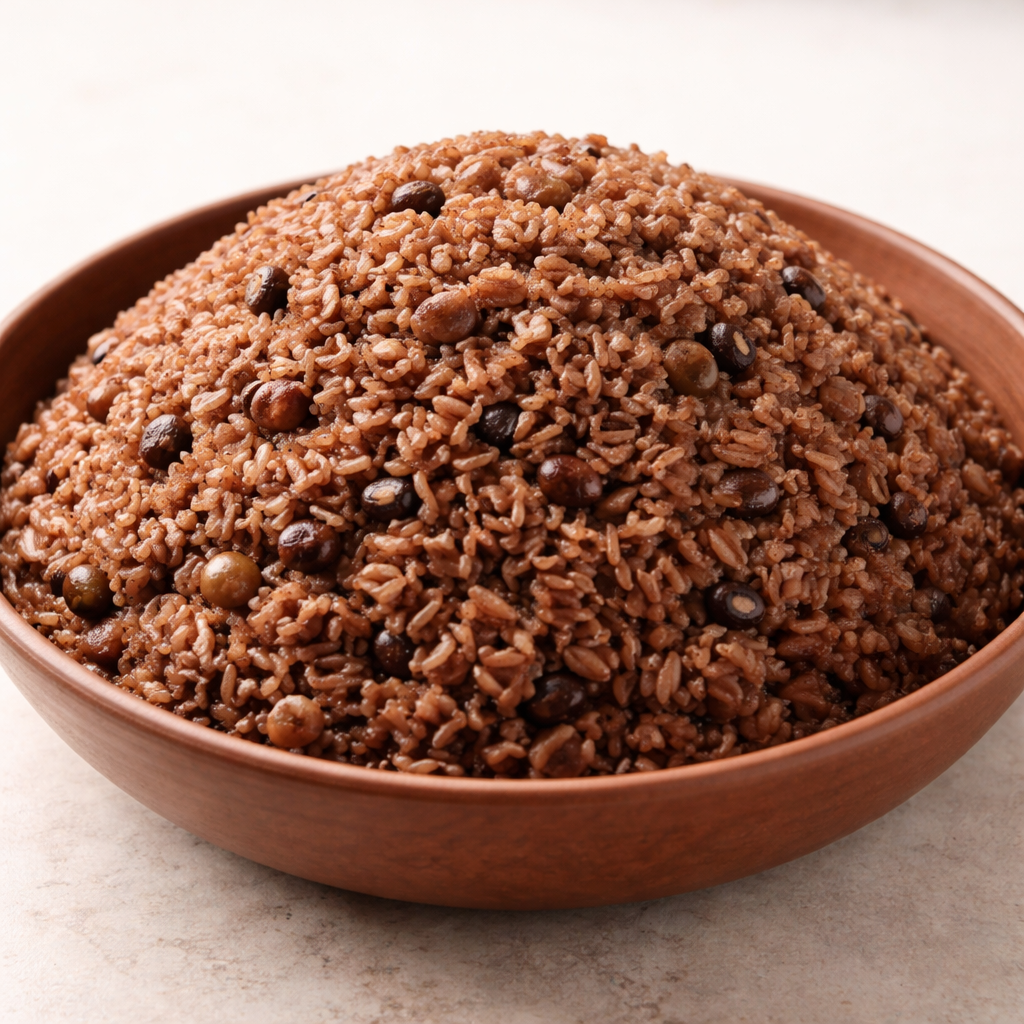
Ghanaian Waakye Recipe
 1 hour 45 mins
 Ghanaian
 Dinner
 Medium
Ingredients
- 2 cups long-grain rice
- 1½ cups dried black-eyed peas (or red beans)
- 6–8 dried Waakye leaves (millet leaves)
- 6 cups water (adjust as needed)
- 1 teaspoon salt
- 1 tablespoon vegetable oil (optional)
Directions
Step 1 : Sorting and Cleaning the Beans
Begin by carefully sorting through the dried beans to remove any stones, debris, or damaged grains that may affect the quality of your Waakye. Place the beans in a large bowl and rinse them thoroughly under clean running water. This washing process helps eliminate dust and impurities that may have accumulated during storage. Clean beans ensure a smoother cooking process and better taste. After rinsing, drain the beans completely and set them aside. Taking time to properly clean your beans is essential for achieving the authentic Ghanaian Waakye texture and flavor.
Step 2 : Soaking the Beans for Even Cooking
Transfer the cleaned beans into a bowl and cover them with plenty of water. Allow them to soak for at least 4 to 6 hours or overnight if possible. Soaking softens the beans and significantly reduces cooking time, making them easier to cook evenly. This step also helps improve digestibility and enhances the final texture of your Waakye. If you are short on time, you can skip soaking, but expect a longer cooking duration. Once soaked, drain the beans and rinse them again before proceeding to the next step.
Step 3 : Preparing the Waakye Leaves
Take the dried Waakye leaves and rinse them lightly under water to remove dust or particles. These leaves are essential for giving Waakye its characteristic reddish-brown color and earthy aroma. If Waakye leaves are unavailable, you can use a small amount of baking soda as a substitute, although the flavor will differ slightly. Tie the leaves together into a small bundle for easy removal after cooking. Preparing the leaves properly ensures that your Waakye retains its authentic Ghanaian identity and delivers the traditional taste loved across West Africa.
Step 4 : Boiling the Beans with Leaves
Place the soaked beans into a large pot and add about 4 cups of water. Add the bundle of Waakye leaves to the pot and bring everything to a boil over medium heat. Allow the beans to cook until they begin to soften, which typically takes about 30 to 40 minutes. Stir occasionally to prevent sticking and ensure even cooking. The leaves will gradually release their color into the water, creating the signature hue of Waakye. Proper boiling at this stage builds the foundation for the dish’s flavor and texture.
Step 5 : Monitoring Water Levels and Texture
As the beans cook, keep an eye on the water level and add more if necessary to prevent burning. The beans should become tender but not overly soft before adding the rice. This balance is important because the rice will continue cooking alongside the beans later. Stir gently to avoid breaking the beans. Maintaining the right consistency ensures that your Waakye achieves a perfect blend of soft beans and fluffy rice. Patience during this step helps preserve the dish’s structure and prevents it from becoming mushy.
Step 6 : Washing and Preparing the Rice
While the beans are cooking, measure out your rice and rinse it thoroughly under cold water. Wash the rice several times until the water runs clear, removing excess starch. This step prevents the rice from becoming sticky during cooking. Clean rice grains will cook more evenly and absorb the Waakye flavors better. After rinsing, drain the rice completely and set it aside. Preparing the rice properly is crucial for achieving the light, fluffy texture that complements the tender beans in this traditional Ghanaian dish.
Step 7 : Combining Rice with Beans
Once the beans are partially cooked and tender, add the washed rice into the pot. Stir gently to combine the rice and beans evenly. Ensure there is enough water in the pot to cook the rice; the water level should be slightly above the mixture. This stage is where the Waakye truly comes together, blending the flavors of beans, rice, and leaves. Avoid over-stirring to prevent breaking the grains. Combining the ingredients carefully ensures a uniform texture and consistent flavor throughout the dish.
Step 8 : Seasoning and Enhancing Flavor
Add salt to taste and optionally include a tablespoon of vegetable oil to enhance the flavor and texture. Stir gently to distribute the seasoning evenly throughout the mixture. The oil helps keep the rice grains separate and adds a subtle richness to the dish. Taste the broth and adjust seasoning if necessary. Proper seasoning at this stage ensures that every bite of Waakye is flavorful and balanced. This step plays a key role in elevating the dish from simple rice and beans to a delicious Ghanaian staple.
Step 9 : Cooking Until Water is Absorbed
Cover the pot and allow the rice and beans mixture to cook on medium-low heat. Let the water gradually absorb into the rice while the steam finishes cooking the grains. Avoid opening the pot frequently, as this releases steam needed for proper cooking. This process typically takes 20 to 25 minutes. The Waakye should develop a soft yet firm texture with distinct grains. Proper absorption of water is essential for achieving the perfect consistency that defines authentic Ghanaian Waakye.
Step 10 : Reducing Heat for Final Steaming
Once most of the water has been absorbed, reduce the heat to low and allow the Waakye to steam gently. This step ensures that the rice cooks thoroughly without burning at the bottom. Keep the pot covered tightly to trap steam. The slow steaming process enhances the overall texture, making the rice soft and fluffy while keeping the beans intact. This method is key to achieving restaurant-quality Waakye at home. Patience during this stage ensures a perfectly cooked dish.
Step 11 : Removing the Waakye Leaves
After the Waakye is fully cooked, carefully remove the bundle of Waakye leaves from the pot. The leaves have already infused the dish with their unique color and flavor. Discard them, as they are not meant to be eaten. Gently fluff the rice and beans mixture with a fork to separate the grains. Removing the leaves at the right time ensures that the flavor remains balanced without becoming too intense. This step also improves the presentation of the dish.
Step 12 : Fluffing and Final Texture Check
Use a fork or wooden spoon to gently fluff the Waakye, ensuring that the rice and beans are evenly distributed. Check the texture to confirm that the rice is fully cooked and not too soft or hard. If necessary, allow it to steam for a few more minutes. Fluffing helps release excess steam and prevents clumping. This step enhances the final appearance and ensures that each serving has a perfect mix of rice and beans, delivering the ideal Ghanaian Waakye experience.
Step 13 : Serving and Traditional Pairings
Serve your Waakye hot with traditional accompaniments such as fried plantains, boiled eggs, spaghetti, gari, and shito (spicy black pepper sauce). These sides enhance the dish and provide a complete Ghanaian street food experience. Arrange the Waakye neatly on a plate and add your preferred toppings. Serving Waakye with a variety of sides allows you to enjoy different textures and flavors in every bite. This final step transforms your dish into a vibrant and satisfying meal loved across Ghana.