


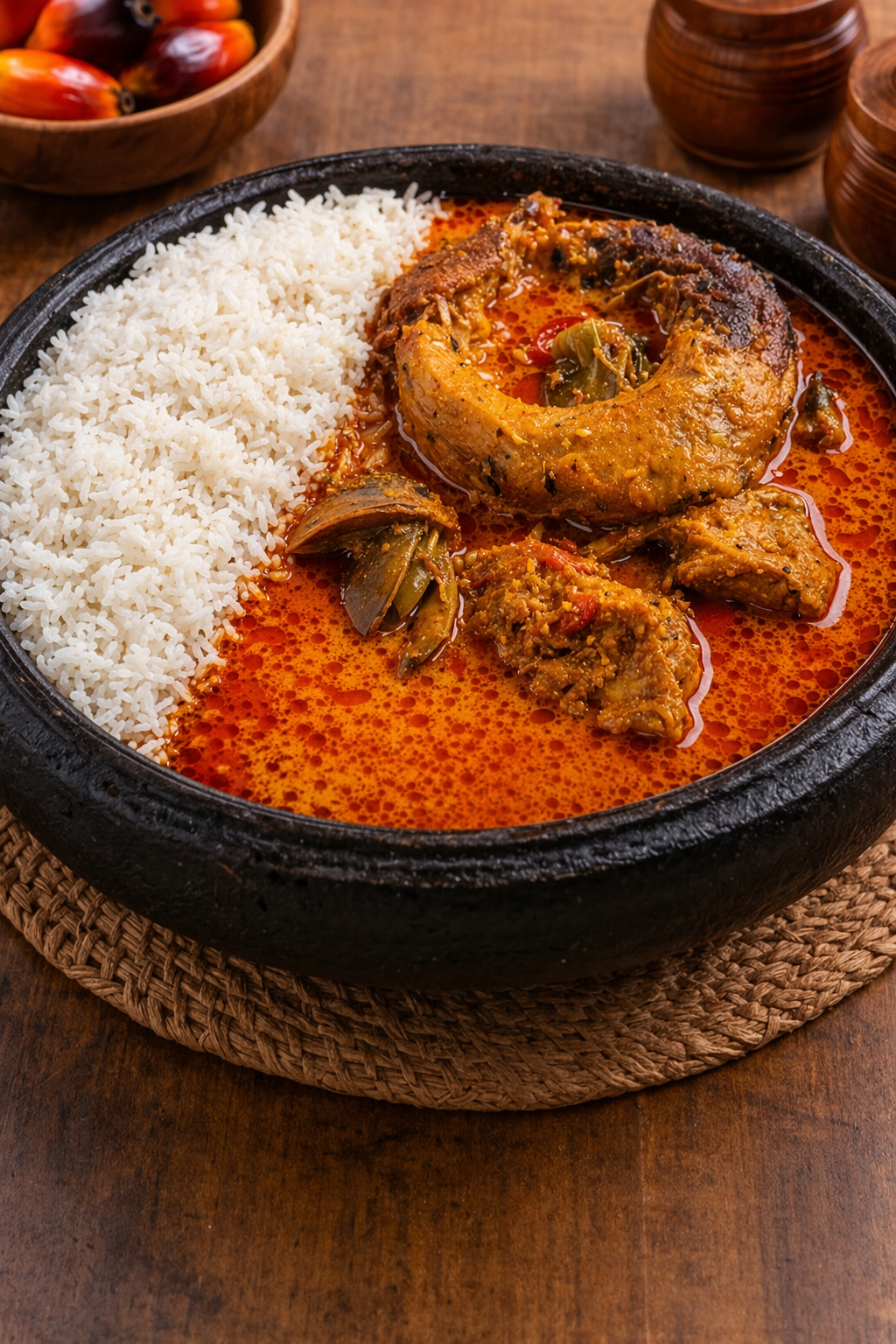
Ghanaian Rice with Palm Nut Soup Recipe
 1 hour 15 mins
 Ghanaian
 Dinner
 Medium
Ingredients
- 2 cups long grain rice
- 4 cups water
- ½ teaspoon salt
- 2 cups palm nut extract (fresh or canned)
- 2 cup meat (beef, goat, or chicken)
- 1 smoked fish (optional)
- 1 medium onion (chopped)
- 2 medium tomatoes (blended)
- 2 cloves garlic (minced)
- 1 teaspoon fresh ginger (grated)
- 1 tablespoon ground crayfish (optional)
- 1 seasoning cube (optional)
- 1 teaspoon salt (adjust to taste)
- 1 scotch bonnet pepper (optional)
- 2 cups water or stock
Directions
Step 1 : Measure and Rinse the Rice Thoroughly
Begin by measuring two cups of rice into a bowl and rinsing it under cold running water. Use your fingers to gently rub the grains together, removing excess starch and impurities. Repeat this process several times until the water becomes clear. Proper rinsing ensures that the rice cooks into separate, fluffy grains instead of becoming sticky. Once rinsed, drain the rice completely using a sieve and set it aside. This foundational step is essential for achieving perfectly cooked rice that pairs beautifully with the rich palm nut soup.
Step 2 : Cook the Rice Until Tender
Place a pot on medium heat and add four cups of water along with a pinch of salt. Bring the water to a boil, then add the rinsed rice. Stir briefly to ensure even distribution. Reduce the heat to low, cover the pot, and allow the rice to cook for about 15–20 minutes. Avoid stirring too frequently to maintain the integrity of the grains. Once the rice is soft and the water has been absorbed, remove from heat and allow it to rest before fluffing with a fork.
Step 3 : Prepare the Meat for the Soup Base
Wash the meat thoroughly and place it in a pot. Add chopped onions, a little salt, and some ginger to season it. Pour in a small amount of water and allow the meat to boil until tender. This process helps release flavorful stock that will enhance the palm nut soup. Ensure the meat is cooked properly and retains a rich taste. Set the cooked meat and stock aside for later use in building the soup.
Step 4 : Blend Tomatoes and Aromatics
Blend the tomatoes together with garlic, ginger, and part of the onion to create a smooth mixture. This blend forms the flavor base of the palm nut soup. Ensure the mixture is well combined and smooth. This step is crucial because it helps distribute the flavors evenly throughout the soup, creating a balanced and rich taste profile.
Step 5 : Heat Palm Nut Extract Properly
Pour the palm nut extract into a large pot and place it on medium heat. Allow it to cook gently, stirring occasionally to prevent burning. The palm nut extract should begin to thicken slightly as it heats. This step helps develop the rich flavor and color that palm nut soup is known for.
Step 6 : Add Tomato Mixture and Combine
Pour the blended tomato mixture into the palm nut extract and stir thoroughly. Allow it to cook for several minutes so the flavors can combine and the mixture thickens. Stir occasionally to prevent sticking. This step enhances the depth of the soup and ensures a rich, well-balanced flavor.
Step 7 : Add Meat Stock and Protein
Add the cooked meat along with its stock into the pot. Stir well to combine with the palm nut mixture. If using smoked fish, add it at this stage. Allow the soup to simmer so the flavors meld together. This step adds richness and depth to the soup, making it more satisfying.
Step 8 : Add Seasonings and Spices
Introduce the seasoning cube, salt, ground crayfish, and optional scotch bonnet pepper. Stir thoroughly to combine. Allow the soup to simmer for a few minutes so the spices blend evenly. This step ensures that the soup develops a bold and well-rounded flavor.
Step 9 : Simmer Until Oil Rises to the Top
Allow the soup to cook on medium heat until the oil begins to rise to the surface. This indicates that the soup is well-cooked and the flavors are fully developed. Stir occasionally to prevent burning and ensure even cooking.
Step 10 : Adjust Consistency and Taste
Check the thickness of the soup and adjust by adding water or allowing it to reduce further. Taste and adjust seasoning as needed. This step ensures the soup has the perfect balance of flavor and texture.
Step 11 : Final Simmer for Flavor Development
Allow the soup to simmer for a few more minutes to deepen the flavors. Stir gently and ensure all ingredients are well combined. This final cooking stage enhances the richness of the soup.
Step 12 : Serve Rice with Palm Nut Soup
Fluff the cooked rice and serve hot alongside the palm nut soup. Ensure each serving has a generous portion of soup. Enjoy this authentic Ghanaian dish with its rich and comforting flavors.