


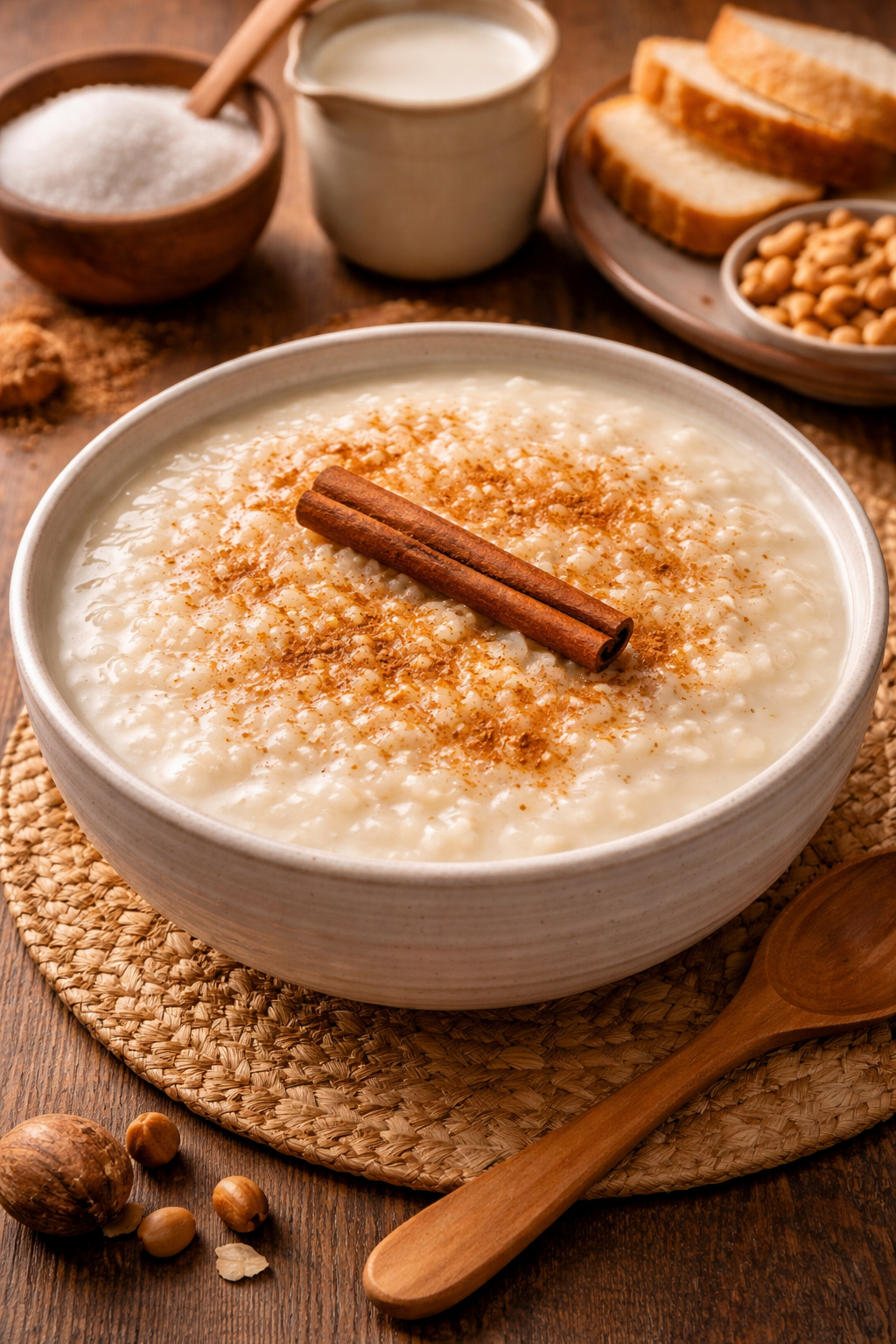
Ghanaian Rice Water Recipe Rice Porridge
 35 mins
 Ghanaian
 Breakfast
 Easy
Easy
Ingredients
- 1 cup white rice (long grain or jasmine)
- 4 cups water
- 1 cup evaporated milk or coconut milk (optional)
- 3 tablespoons sugar (adjust to taste)
- ¼ teaspoon salt
- ½ vanilla extract (optional)
- ½ grated nutmeg (optional)
- ½ teaspoon ground cinnamon (optional)
- 1 cinnamon stick
Directions
Step 1 : Select and Measure the Right Rice
Begin by choosing high-quality white rice such as jasmine or long-grain rice for the best texture and flavor. Measure one cup of rice carefully and place it in a clean bowl. The type of rice you choose will influence the creaminess of your Ghanaian rice water, as softer grains break down more easily during cooking. Avoid using parboiled rice, as it tends to remain firm and may not achieve the desired porridge consistency. Proper measurement ensures the right balance between rice and water, which is essential for a smooth and well-cooked porridge.
Step 2 : Wash the Rice Thoroughly
Rinse the rice under cold running water to remove excess starch, dirt, and impurities. Gently rub the grains between your fingers while washing, and repeat this process several times until the water becomes clear. This step helps prevent the porridge from becoming overly sticky or clumpy during cooking. Clean rice also ensures a fresh, pure taste in the final dish. Once thoroughly rinsed, drain the rice using a sieve and allow it to sit for a few minutes to remove excess water before proceeding to the next step.
Step 3 : Prepare the Cooking Pot and Water
Place a medium-sized pot on the stove and pour in four cups of clean water. Turn the heat to medium and allow the water to begin warming up gradually. Using the correct amount of water is crucial for achieving the ideal porridge consistency, as too little water may result in thick, undercooked rice, while too much water may dilute the flavor. This stage sets the foundation for cooking the rice evenly and ensures that it softens properly as it absorbs the liquid.
Step 4 : Add Rice to the Heated Water
Once the water is warm but not fully boiling, carefully add the rinsed rice into the pot. Stir gently to ensure the grains are evenly distributed and do not stick together. This step allows the rice to begin cooking gradually, helping it break down more easily and release its starch into the water. Avoid adding the rice to rapidly boiling water, as this can cause uneven cooking and affect the final texture of the porridge. Consistent heat and gentle stirring are key to achieving a smooth and creamy result.
Step 5 : Introduce Salt and Initial Flavoring
Add a small pinch of salt to the pot to enhance the overall flavor of the rice water. If desired, include a cinnamon stick at this stage to infuse a subtle warmth and aroma into the porridge. Stir gently to combine the ingredients and ensure even distribution. The salt balances the sweetness that will be added later, while the cinnamon introduces a comforting, traditional flavor. Allow the mixture to simmer gently, giving the rice time to absorb the seasoning and begin softening.
Step 6 : Simmer and Stir Consistently
Reduce the heat to low and allow the rice to simmer gently. Stir the mixture frequently to prevent the rice from sticking to the bottom of the pot. As the rice cooks, it will gradually soften and release starch, thickening the liquid into a creamy consistency. This step requires patience, as slow cooking ensures even texture and prevents burning. Continue stirring at intervals, ensuring that the rice cooks uniformly and the porridge develops a smooth, lump-free consistency that is characteristic of Ghanaian rice water.
Step 7 : Mash Rice for Creamy Texture
Once the rice becomes very soft, use the back of a spoon or a ladle to gently mash some of the grains against the side of the pot. This process helps release more starch, creating a thicker and creamier porridge. Do not mash all the rice completely; leaving some grains intact adds a pleasant texture to the dish. Stir the mixture thoroughly after mashing to ensure an even consistency throughout. This step is essential for achieving the traditional smooth and slightly thick texture of Ghanaian rice water.
Step 8 : Adjust Water for Desired Consistency
Check the thickness of the porridge and adjust by adding small amounts of hot water if necessary. If the mixture is too thick, gradually pour in additional water while stirring continuously to avoid lumps. If it is too thin, allow it to cook a little longer uncovered to reduce and thicken. Achieving the right consistency is key, as Ghanaian rice water is typically light and smooth rather than overly thick. Take your time during this step to ensure the perfect balance between creaminess and fluidity.
Step 9 : Add Milk for Richness
Pour in the evaporated milk or coconut milk to enrich the porridge and give it a creamy, indulgent flavor. Stir well to incorporate the milk evenly into the mixture. The addition of milk enhances both taste and texture, making the dish more satisfying and nutritious. Allow the porridge to simmer for a few more minutes so the milk blends fully with the rice. This step transforms the rice water from a simple dish into a rich and comforting meal suitable for breakfast or light dining.
Step 10 : Sweeten and Flavor the Porridge
Add sugar, vanilla extract, and grated nutmeg to the porridge, stirring thoroughly to combine. Taste and adjust the sweetness according to your preference. The sugar provides a pleasant sweetness, while the vanilla and nutmeg add depth and aroma. Allow the porridge to cook for another two to three minutes so the flavors meld together beautifully. This step finalizes the flavor profile, creating a balanced dish that is both comforting and delicious.