

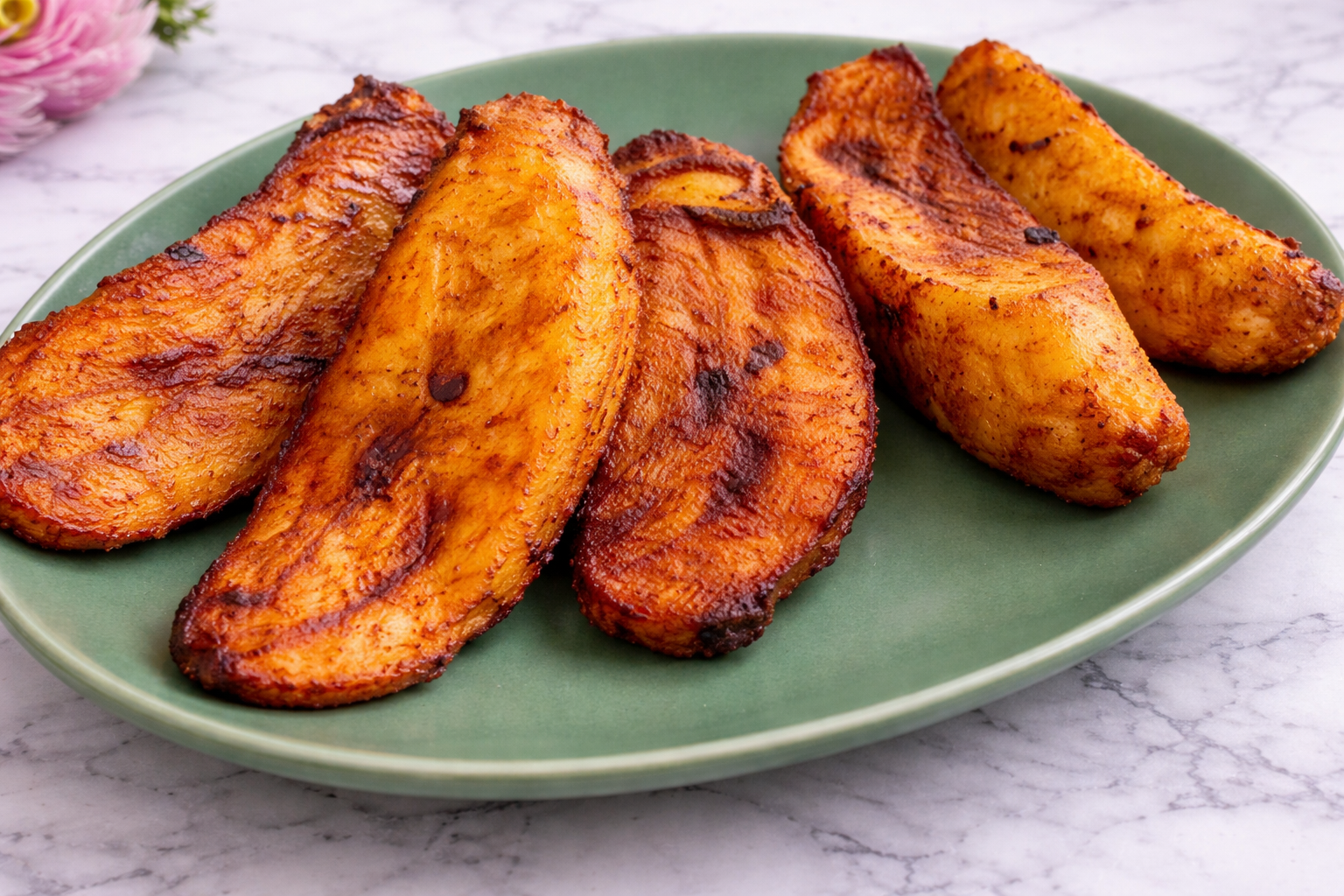
Ghanaian Fried Plantain Recipe
 20 mins
 Ghanaian
 Snack
Snack
 Easy
Easy
Ingredients
- 4 ripe plantains (yellow with black spots)
- ½ teaspoon salt
- ½ teaspoon ground ginger (optional for kelewele style)
- ½ teaspoon cayenne pepper or chili powder (optional)
- ¼ teaspoon garlic powder (optional)
- 1 cup vegetable oil (for frying)
Directions
Step 1 : Select the Right Plantains for Best Results
Choosing the right plantains is the first and most important step in making authentic Ghanaian fried plantain. Look for ripe plantains that are yellow with black spots, as these are naturally sweet and soft. Avoid overly green plantains because they are starchy and not ideal for this recipe. Overripe plantains that are too soft may fall apart during frying. The perfect balance ensures your fried plantain will be crispy on the outside and tender inside, giving you that classic Ghanaian taste and texture loved by many.
Step 2 : Peel the Plantains Properly
Begin by cutting off both ends of each plantain using a sharp knife. Make a shallow slit along the length of the plantain skin, being careful not to cut too deep into the flesh. Gently peel off the skin with your fingers or knife. Ripe plantains are usually easy to peel, but if they stick, you can use the knife to assist. Proper peeling ensures smooth slices and maintains the integrity of the plantain, which is essential for even frying and achieving the perfect presentation.
Step 3 : Slice the Plantains Evenly
Place the peeled plantains on a clean cutting board and slice them into your preferred shapes. You can cut them diagonally for larger pieces or into round coins for smaller bites. Ensure the slices are even in thickness so they cook uniformly. Uneven slices can result in some pieces being overcooked while others remain undercooked. Consistency in slicing helps achieve a balanced texture and ensures every bite is equally delicious and perfectly fried.
Step 4 : Season the Plantains (Optional Kelewele Style)
If you want to add a spicy Ghanaian twist, transfer the sliced plantains into a bowl and sprinkle with salt, ginger, garlic powder, and chili powder. Mix gently to coat all pieces evenly. This step enhances the flavor and gives the plantains the signature kelewele taste. If you prefer plain fried plantain, you can skip the spices and use only salt. Allow the plantains to sit for a few minutes so the seasoning can penetrate the slices properly.
Step 5 : Heat the Oil to the Right Temperature
Pour vegetable oil into a frying pan and place it on medium heat. Allow the oil to heat gradually until it is hot but not smoking. Proper oil temperature is crucial for frying plantains correctly. If the oil is too hot, the plantains will burn quickly on the outside while remaining uncooked inside. If the oil is not hot enough, the plantains will absorb too much oil and become soggy. A medium heat ensures even cooking and a crispy texture.
Step 6 : Test the Oil Before Frying
Before adding all the plantains, test the oil by placing one piece into the pan. If it sizzles immediately and rises to the surface, the oil is ready. This simple test helps prevent mistakes and ensures the plantains fry properly. Properly heated oil creates a golden crust on the plantains while maintaining their soft interior. This step is essential for achieving restaurant-quality fried plantains at home.
Step 7 : Fry the Plantains in Batches
Carefully add the sliced plantains into the hot oil in a single layer. Avoid overcrowding the pan, as this can lower the oil temperature and affect the frying process. Frying in batches ensures each piece cooks evenly and develops a crispy exterior. Allow enough space between slices so they do not stick together. This step is key to achieving that perfect golden color and delicious texture.
Step 8 : Turn the Plantains for Even Cooking
Use a slotted spoon or spatula to gently turn the plantains after a few minutes. This ensures both sides cook evenly and achieve a consistent golden-brown color. Turning the plantains carefully prevents breaking and helps maintain their shape. Even cooking enhances both the texture and flavor, giving you perfectly fried plantains that are crispy outside and soft inside.
Step 9 : Monitor Color and Texture Closely
Keep a close eye on the plantains as they fry. They should turn a rich golden brown, indicating they are ready. Avoid overcooking, as this can lead to a burnt taste. The goal is a balance between caramelization and softness. Properly fried plantains will have slightly crispy edges and a tender center, making them irresistibly delicious.
Step 10 : Remove and Drain Excess Oil
Once the plantains are cooked, remove them from the oil using a slotted spoon and place them on a plate lined with paper towels. This helps absorb excess oil and keeps the plantains light and crispy. Draining properly prevents greasiness and enhances the overall eating experience.
Step 11 : Repeat Frying Process for Remaining Batches
Continue frying the remaining plantain slices in batches until all are cooked. Ensure the oil temperature remains consistent throughout the process. Adjust heat if necessary. Consistency ensures all plantains have the same texture and flavor.
Step 12 : Serve Hot and Fresh
Serve the fried plantains immediately while they are still hot and crispy. They can be enjoyed on their own or paired with rice, beans, eggs, or stew. Freshly fried plantains taste best and deliver the authentic Ghanaian experience
Step 13 : Enjoy Your Ghanaian Fried Plantain
Enjoy your homemade Ghanaian fried plantain as a snack or side dish. Its sweet, savory, and slightly spicy flavor makes it a favorite for all occasions. Perfect for sharing with family and friends.