


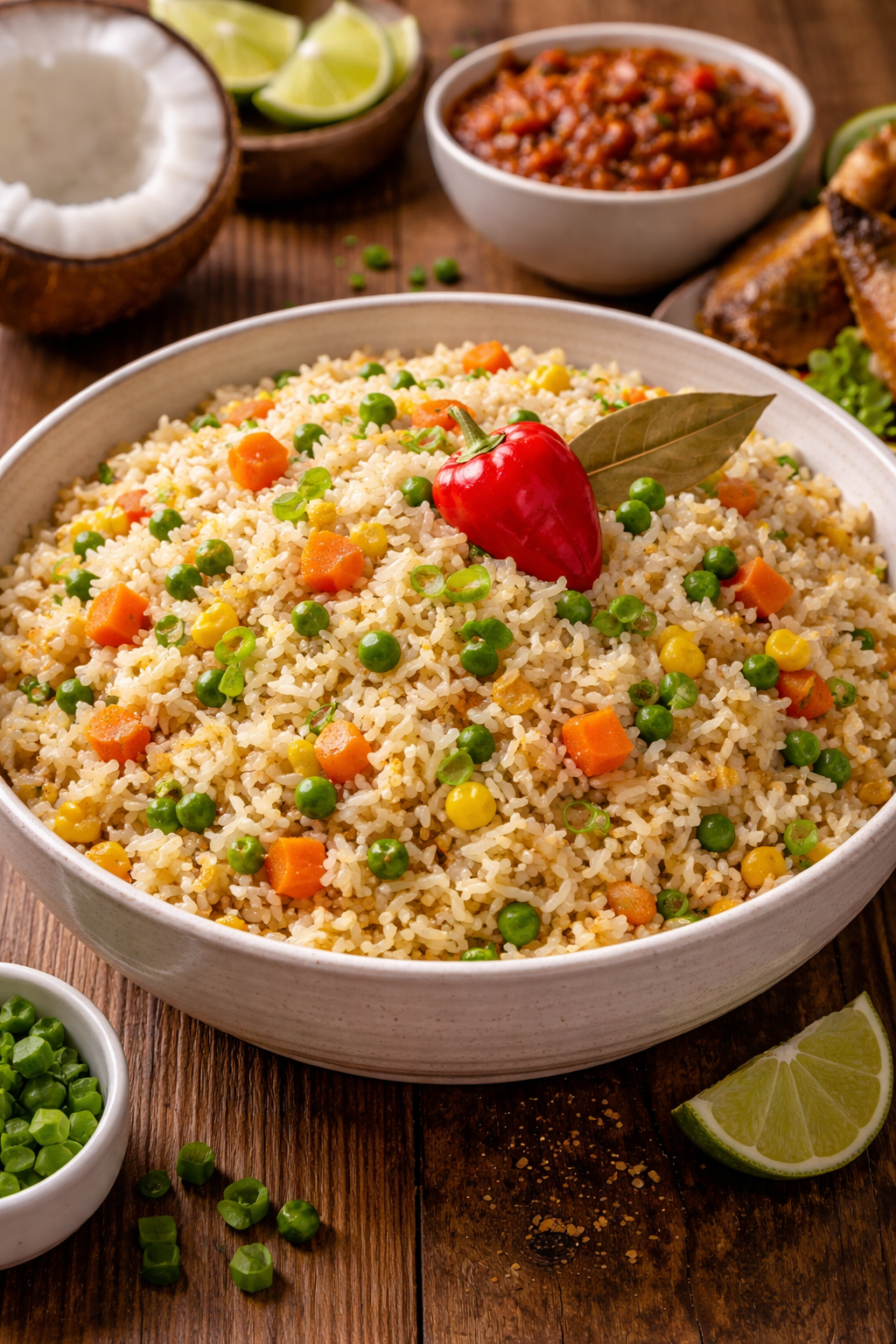
Ghanaian Coconut Rice Recipe
 45 mins
 Ghanaian
 Dinner
 Easy
Easy
Ingredients
- 2 cups long grain rice (jasmine or basmati recommended)
- 1½ cups coconut milk (thick)
- 1 cup water
- 1 medium onion (finely chopped)
- 2 cloves garlic (minced)
- 1 teaspoon fresh ginger (grated)
- 2 tablespoons vegetable oil or coconut oil
- 1 teaspoon salt (adjust to taste)
- 1 seasoning cube (optional but traditional)
- ½ teaspoon black pepper
- 1 cup mixed vegetables (carrots, peas, sweetcorn)
- 1 scotch bonnet pepper (optional, for heat)
- 1 bay leaf (optional)
- ½ teaspoon thyme (optional)
Directions
Step 1 : Rinse and Prepare the Rice Properly
Start by measuring your rice into a bowl and rinsing it thoroughly under cold running water. Gently swirl the rice with your fingers to remove excess starch, which can cause the rice to become sticky during cooking. Repeat this rinsing process at least three to four times until the water runs clear. Once clean, drain the rice completely using a sieve and allow it to sit for a few minutes. This step is crucial for achieving light, fluffy grains that do not clump together, ensuring your Ghanaian coconut rice has the perfect texture and consistency.
Step 2 : Prepare and Measure All Ingredients
Before cooking begins, gather and prepare all your ingredients to streamline the process. Finely chop the onion, mince the garlic, and grate the ginger to release their natural aromas. Measure out the coconut milk, water, spices, and vegetables to avoid interruptions while cooking. If you are using a scotch bonnet pepper, leave it whole for mild heat or slice it for a stronger kick. Having everything ready allows for better timing and control, ensuring each ingredient is added at the right stage for maximum flavor infusion.
Step 3 : Heat Oil and Build the Flavor Base
Place a medium-sized pot on the stove over medium heat and add the vegetable or coconut oil. Once the oil is warm, add the chopped onions and sauté them gently until they become soft and translucent. Stir occasionally to prevent burning. Next, add the minced garlic and grated ginger, stirring continuously for about one minute. This combination forms the aromatic base of the dish. The goal is to release deep, savory flavors that will infuse into the rice, creating a rich and authentic Ghanaian taste profile.
Step 4 : Add Spices and Seasonings
After the onions, garlic, and ginger are fragrant, add your seasoning cube, black pepper, thyme, and bay leaf if using. Stir everything together thoroughly to ensure the spices coat the aromatics evenly. This step enhances the depth of flavor and ensures that every grain of rice absorbs the seasoning later. If you prefer a slightly spicy dish, introduce the scotch bonnet pepper at this stage. Allow the spices to cook for about a minute to unlock their full aroma and blend seamlessly with the base.
Step 5 : Pour in Coconut Milk and Water
Carefully pour the coconut milk into the pot, followed by the measured water. Stir gently to combine all the ingredients. Increase the heat slightly and bring the mixture to a gentle boil. The coconut milk gives the dish its signature creamy richness, while the water helps balance the consistency for proper rice cooking. Taste the liquid at this stage and adjust salt if necessary. This liquid mixture is the foundation that will cook the rice and infuse it with flavor.
Step 6 : Add Rice and Stir Evenly
Once the coconut mixture begins to boil, add the rinsed rice into the pot. Stir carefully to distribute the rice evenly within the liquid, ensuring no grains stick together or settle unevenly. This step is important for consistent cooking and texture. Avoid over-stirring, as this can break the grains and make the rice mushy. Ensure the rice is fully submerged in the liquid, as this allows it to absorb the coconut flavors properly while cooking.
Step 7 : Introduce Vegetables for Color and Nutrition
Add your mixed vegetables—carrots, peas, and sweetcorn—into the pot. Stir gently to incorporate them into the rice. These vegetables not only add vibrant color but also enhance the nutritional value of the dish. They provide a slight sweetness and texture contrast that complements the creamy coconut base. Distribute the vegetables evenly so that every serving contains a balanced mix of ingredients. This step transforms the dish from plain rice into a wholesome, satisfying meal.
Step 8 : Cover and Simmer Gently
Reduce the heat to low and cover the pot tightly with a lid. Allow the rice to simmer gently for about 15–20 minutes. Avoid lifting the lid too often, as this releases steam and interrupts the cooking process. The steam trapped inside the pot is essential for evenly cooking the rice and allowing it to absorb all the coconut flavors. This slow cooking method ensures the rice becomes tender without burning or drying out.
Step 9 : Check Texture and Adjust Moisture
After about 15 minutes, check the rice to see if it is fully cooked. If the rice is still slightly firm and the liquid has evaporated, sprinkle a small amount of water over it, cover again, and allow it to cook for a few more minutes. If it is perfectly tender, proceed to the next step. This stage ensures that your rice achieves the ideal texture—soft but not mushy, with each grain distinct and flavorful.
Step 10 : Fluff, Rest, and Serve
Once the rice is fully cooked, remove the pot from heat and let it sit covered for about five minutes. This resting period allows the remaining steam to finish cooking the rice gently. Afterward, use a fork to fluff the rice, separating the grains and mixing the ingredients evenly. Remove the scotch bonnet pepper if used whole. Serve warm with grilled fish, fried chicken, or a rich tomato stew for a complete Ghanaian meal experience.