

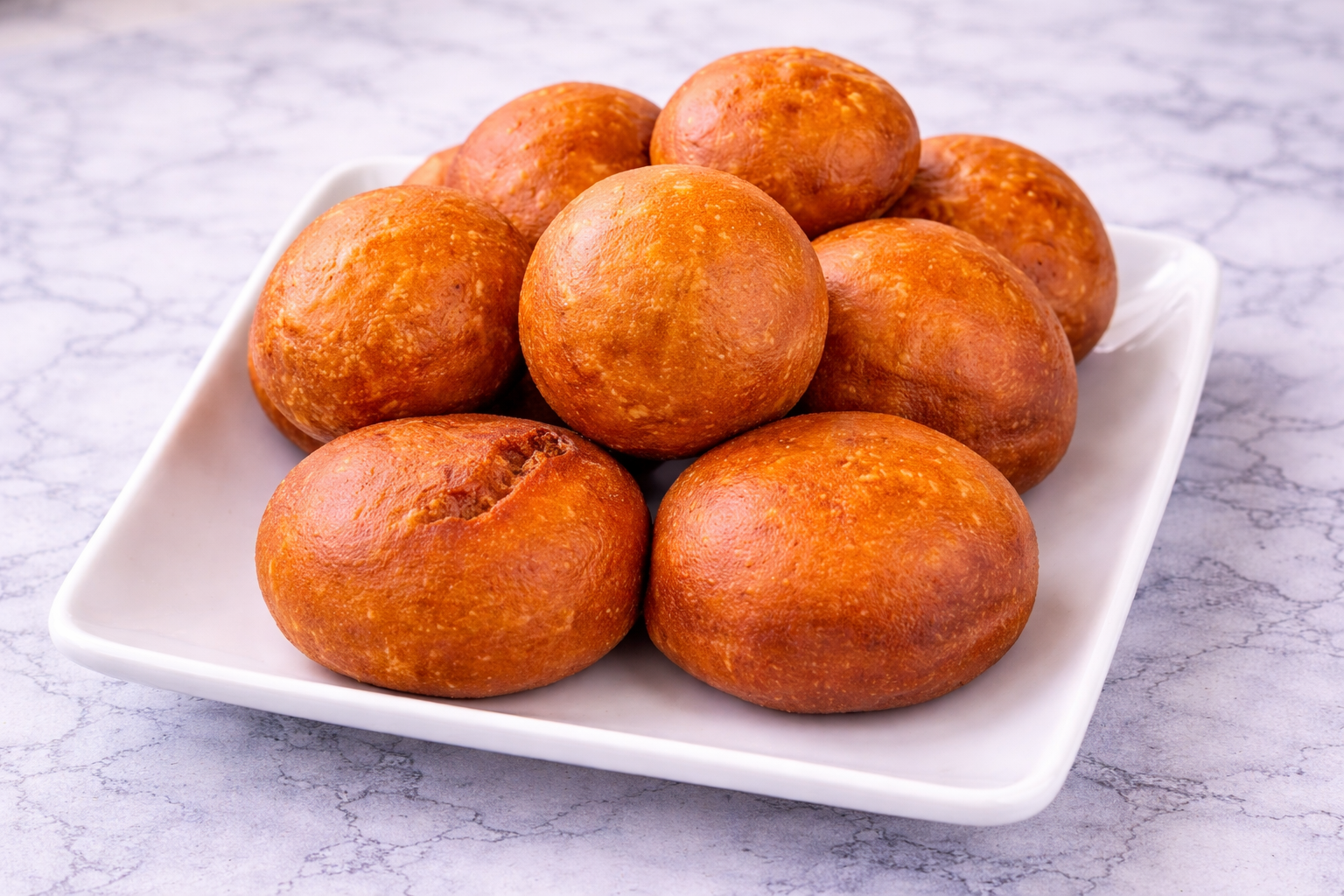
Ghanaian Bofrot Puff Puff Recipe
 30 mins
 Ghanaian
 Snack
Snack
 Easy
Easy
Ingredients
- 3 cups all-purpose flour
- ½ cup sugar
- 1 teaspoon salt
- 1 tablespoon active dry yeast
- 2 cups warm water
- ½ teaspoon nutmeg (optional)
- vegetable oil (for deep frying)
Directions
Step 1 : Prepare the Yeast Mixture Properly
Start by activating the yeast. In a small bowl, combine warm water (not hot) with the active dry yeast and a teaspoon of sugar. Stir gently and let it sit for about 5–10 minutes until it becomes frothy. This indicates that the yeast is active and ready to use. Proper yeast activation is essential for achieving soft and fluffy Bofrot. If the mixture does not foam, the yeast may be inactive and should be replaced.
Step 2 : Combine Dry Ingredients Evenly
In a large mixing bowl, add the flour, remaining sugar, salt, and nutmeg. Mix thoroughly using a whisk or spoon to ensure all ingredients are evenly distributed. This step ensures consistent flavor throughout the dough. Nutmeg adds a subtle warmth and traditional aroma to the Bofrot, making it more authentic and flavorful.
Step 3 : Add Yeast Mixture to Dry Ingredients
Pour the activated yeast mixture into the bowl of dry ingredients. Gradually add the remaining warm water while mixing continuously. This helps form a smooth batter without lumps. The mixture should be thick but slightly stretchy, similar to pancake batter but denser. Proper mixing ensures the dough develops the right consistency for frying.
Step 4 : Mix the Dough Until Smooth
Using a wooden spoon or your hands, mix the dough thoroughly for several minutes. This helps develop gluten, which contributes to the soft and airy texture of the Bofrot. The dough should be smooth, elastic, and slightly sticky. Avoid adding too much flour, as this can make the Bofrot dense instead of fluffy
Step 5 : Allow the Dough to Rise
Cover the bowl with a clean cloth or plastic wrap and place it in a warm environment. Let the dough rise for about 45 minutes to 1 hour, or until it doubles in size. This fermentation process allows the yeast to produce air bubbles, which give the Bofrot its light and fluffy texture.
Step 6 : Prepare Oil for Deep Frying
Pour vegetable oil into a deep pan or pot and heat it over medium heat. The oil should be deep enough to allow the dough to float freely. Proper oil temperature is crucial—too hot and the Bofrot will brown too quickly without cooking inside; too cool and it will absorb excess oil.
Step 7 : Test the Oil Temperature
To check if the oil is ready, drop a small amount of dough into the oil. If it rises to the surface and starts to brown gradually, the oil is ready. This step prevents undercooked or overly greasy Bofrot.
Step 8 : Shape the Dough Carefully
Using your hand or a spoon, scoop small portions of the dough and gently drop them into the hot oil. Traditionally, the dough is squeezed between fingers to form round balls. Work carefully to maintain uniform sizes for even cooking.
Step 9 : Fry Until Golden Brown
Allow the Bofrot to fry, turning occasionally to ensure even browning on all sides. This process takes about 4–6 minutes per batch. The Bofrot should develop a beautiful golden-brown color while remaining soft inside.
Step 10 : Remove and Drain Excess Oil
Use a slotted spoon to remove the fried Bofrot from the oil and place them on paper towels. This helps absorb excess oil and keeps them light and enjoyable.
Step 11 : Continue Frying Remaining Dough
Repeat the frying process in batches until all the dough is used. Avoid overcrowding the pan, as this can lower the oil temperature and affect cooking quality.
Step 12 : Allow to Cool Slightly Before Serving
Let the Bofrot cool for a few minutes before serving. This helps enhance the texture and prevents burns from hot oil.
Step 13 : Serve and Enjoy
Serve warm Bofrot with tea, coffee, or chocolate drink. Enjoy this classic Ghanaian treat.