

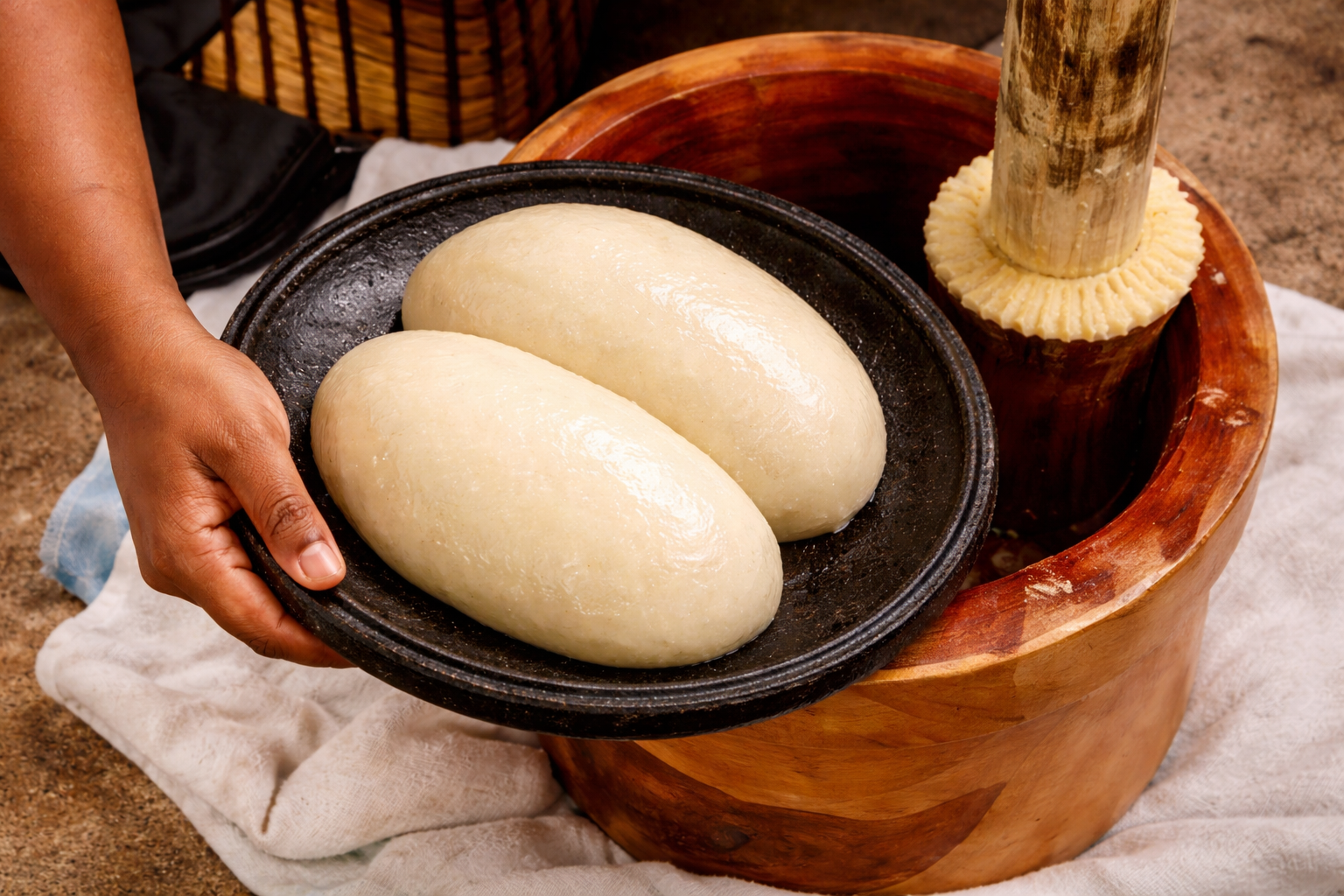
Ghanaian Fufu Recipe
 50 mins
 Ghanaian
 Dinner
 Medium
Ingredients
- 2 medium cassava roots (peeled and cut into chunks)
- 2 unripe plantains (peeled and sliced)
- Water (enough to boil)
Directions
Step 1 : Select Fresh Cassava and Plantains Carefully
Start by selecting fresh cassava roots and unripe plantains. The cassava should be firm, without dark spots or softness, while the plantains should be green and firm. Fresh ingredients are essential for achieving the perfect fufu texture. Using high-quality cassava ensures a smooth consistency, while unripe plantains add firmness and elasticity. Carefully inspect each ingredient before use to avoid spoilage or bitterness in the final dish.
Step 2 : Peel Cassava Properly
Using a sharp knife, carefully peel the cassava roots to remove the thick brown skin and the inner pink layer. Rinse thoroughly under running water to remove dirt and residue. Cut the cassava into medium-sized chunks and remove the fibrous core found in the center. This step is crucial because the core can affect the texture of the fufu. Clean cassava ensures a smooth, lump-free result.
Step 3 : Prepare the Plantains
Peel the plantains by slicing the skin lengthwise and removing it carefully. Cut the plantains into chunks similar in size to the cassava pieces. Rinse them under clean water. Using unripe plantains helps maintain firmness and prevents the fufu from becoming too soft. Proper preparation ensures balanced texture and taste.
Step 4 : Wash Ingredients Thoroughly
Place the cassava and plantain pieces into a bowl and wash thoroughly under clean running water. This step removes any dirt, debris, or unwanted particles. Clean ingredients are essential for both hygiene and flavor. Repeat rinsing if necessary until the water runs clear.
Step 5 : Boil Cassava and Plantains Together
Transfer the cleaned cassava and plantain into a large pot. Add enough water to cover them and place on medium heat. Allow them to boil until soft and tender, which typically takes 25–30 minutes. Proper boiling ensures the ingredients are soft enough for pounding. Check by piercing with a fork.
Step 6 : Drain Excess Water
Once the cassava and plantain are fully cooked, drain the water completely using a colander. Removing excess water is important to prevent the fufu from becoming watery. Allow the cooked pieces to cool slightly before pounding.
Step 7 : Begin Pounding in a Mortar
Transfer a portion of the cooked cassava and plantain into a traditional mortar. Using a pestle, begin pounding the mixture steadily. This step requires strength and rhythm. Pounding helps break down the fibers and combine the ingredients into a smooth dough.
Step 8 : Add More Mixture Gradually
Continue adding the remaining cassava and plantain in batches while pounding. This ensures even mixing and prevents lumps. Maintain a consistent rhythm to achieve a smooth texture. Proper technique is essential for authentic fufu.
Step 9 : Pound Until Smooth and Elastic
Continue pounding until the mixture becomes smooth, stretchy, and lump-free. The texture should be soft yet firm enough to hold shape. This stage determines the quality of the fufu.
Step 10 : Shape the Fufu
Wet your hands slightly and shape the pounded fufu into smooth balls. This prevents sticking and gives it a neat appearance.
Step 11 : Serve Immediately While Warm
Fufu is best served hot and fresh. Place it in a bowl and pair with your preferred soup.
Step 12 : Pair with Traditional Soups
Serve fufu with light soup, groundnut soup, or palm nut soup for a complete meal.
Step 13 : Enjoy the Authentic Experience
Eat fufu using your fingers by dipping it into soup without chewing, as traditionally done.