

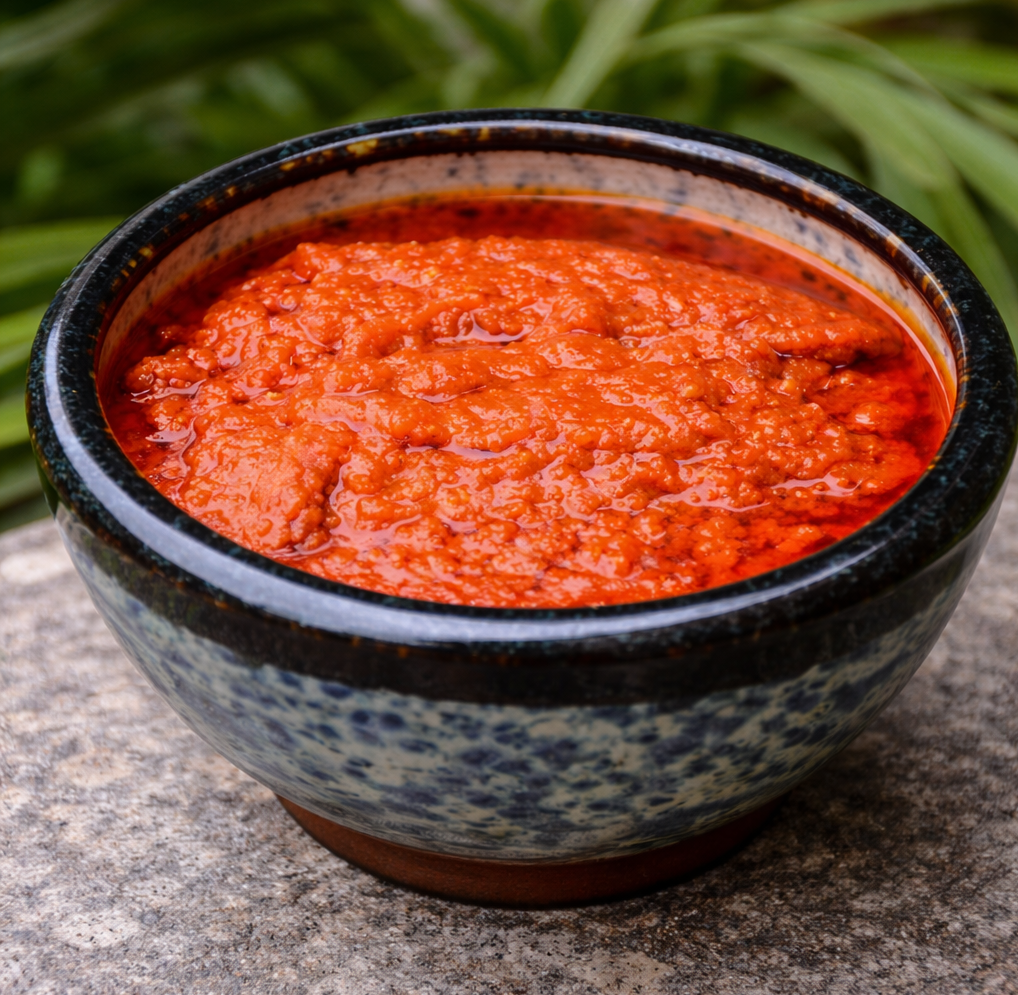
Ghanaian Tomato Stew Recipe
 1 hour
 Ghanaian
 Main
Main
 Easy
Easy
Ingredients
- 5 large fresh tomatoes (blended)
- 2 tablespoons tomato paste
- 1 large onion (chopped)
- 3 cloves garlic (minced)
- 1 teaspoon fresh ginger (grated)
- ½ cup vegetable oil or palm oil
- 1 scotch bonnet pepper (optional)
- 1 teaspoon salt (adjust to taste)
- 1 seasoning cube (optional)
- 1 cup water or stock
- 500g chicken, beef, or fish (optional)
Directions
Step 1 : Prepare and Blend the Tomatoes
Start by washing the fresh tomatoes thoroughly under running water to remove dirt and impurities. Cut them into smaller pieces and add them to a blender along with garlic, ginger, onion, and pepper. Blend until smooth, ensuring there are no lumps. This blended mixture forms the foundation of the stew, so achieving a smooth consistency is essential. A well-blended base ensures even cooking and a rich, uniform flavor throughout the stew.
Step 2 : Prepare the Protein for Cooking
If using meat, fish, or chicken, wash thoroughly and cut into medium-sized pieces. Season lightly with salt, garlic, and ginger, then set aside. This preparation allows the protein to absorb flavor early, enhancing the final taste of the stew. If you prefer a vegetarian version, you can skip this step and focus solely on the tomato base. Preparing your protein properly ensures it complements the stew perfectly when added later.
Step 3 : Cook the Protein Until Tender
Place the seasoned protein in a pot and cook on medium heat with a small amount of water. Cover and allow it to cook until tender. This process also produces a flavorful stock that can be added to the stew for extra depth. Once cooked, set the protein aside and reserve the stock. This step ensures the protein is juicy, flavorful, and ready to absorb the stew.
Step 4 : Heat Oil to Build Flavor Base
Place a clean pot on medium heat and add the vegetable or palm oil. Allow the oil to heat until it becomes slightly shimmering but not smoking. The oil plays a crucial role in Ghanaian tomato stew, as it helps fry the tomato base and develop a rich, deep flavor. Properly heated oil ensures the stew cooks evenly and achieves the desired texture.
Step 5 : Sauté Onions for Aroma
Add chopped onions to the heated oil and sauté until they become soft, translucent, and fragrant. This step builds the foundational flavor of the stew, as onions release their natural sweetness and aroma when cooked. Stir occasionally to prevent burning and ensure even cooking. Well-sautéed onions enhance the overall taste and richness of the stew.
Step 6 : Add Tomato Paste for Depth
Stir in the tomato paste and fry it for a few minutes in the oil. This step is essential for intensifying the color and flavor of the stew. Cooking the tomato paste removes its raw taste and enhances its richness. Continue stirring until it blends well with the onions and oil, creating a deep red base.
Step 7 : Pour in Blended Tomato Mixture
Carefully pour the blended tomato mixture into the pot. Stir well to combine with the fried tomato paste and onions. Allow the mixture to cook on medium heat. At this stage, the stew will appear watery, but it will gradually thicken as it cooks. Stir occasionally to prevent sticking or burning.
Step 8 : Cook Until Moisture Reduces
Allow the stew to cook uncovered so excess water evaporates. This step is crucial for achieving the thick consistency Ghanaian tomato stew is known for. As the stew cooks, it will begin to reduce, and the flavors will intensify. Continue stirring occasionally to ensure even cooking.
Step 9 : Wait for Oil to Separate
One of the key signs that your stew is properly cooked is when the oil begins to rise and separate from the tomato mixture. This indicates that the tomatoes are fully cooked and the stew has developed its signature flavor. This stage is essential and should not be rushed.
Step 10 : Add Protein and Stock
Add the cooked protein and reserved stock into the stew. Stir gently to combine and ensure the protein is well coated with the sauce. This step enhances the richness of the stew and allows the protein to absorb the flavors.
Step 11 : Simmer to Develop Flavor
Allow the stew to simmer on low heat for about 15–20 minutes. This helps all the ingredients blend together and develop a deeper, richer taste. Stir occasionally and monitor the consistency.
Step 12 : Adjust Seasoning
Taste the stew and adjust salt, seasoning, or spice level as needed. This step ensures the stew is perfectly balanced and flavorful.
Step 13 : Final Simmer and Serve
Allow the stew to simmer for a final few minutes, then remove from heat. Serve hot with rice, yam, or plantain. Enjoy this authentic Ghanaian dish.