

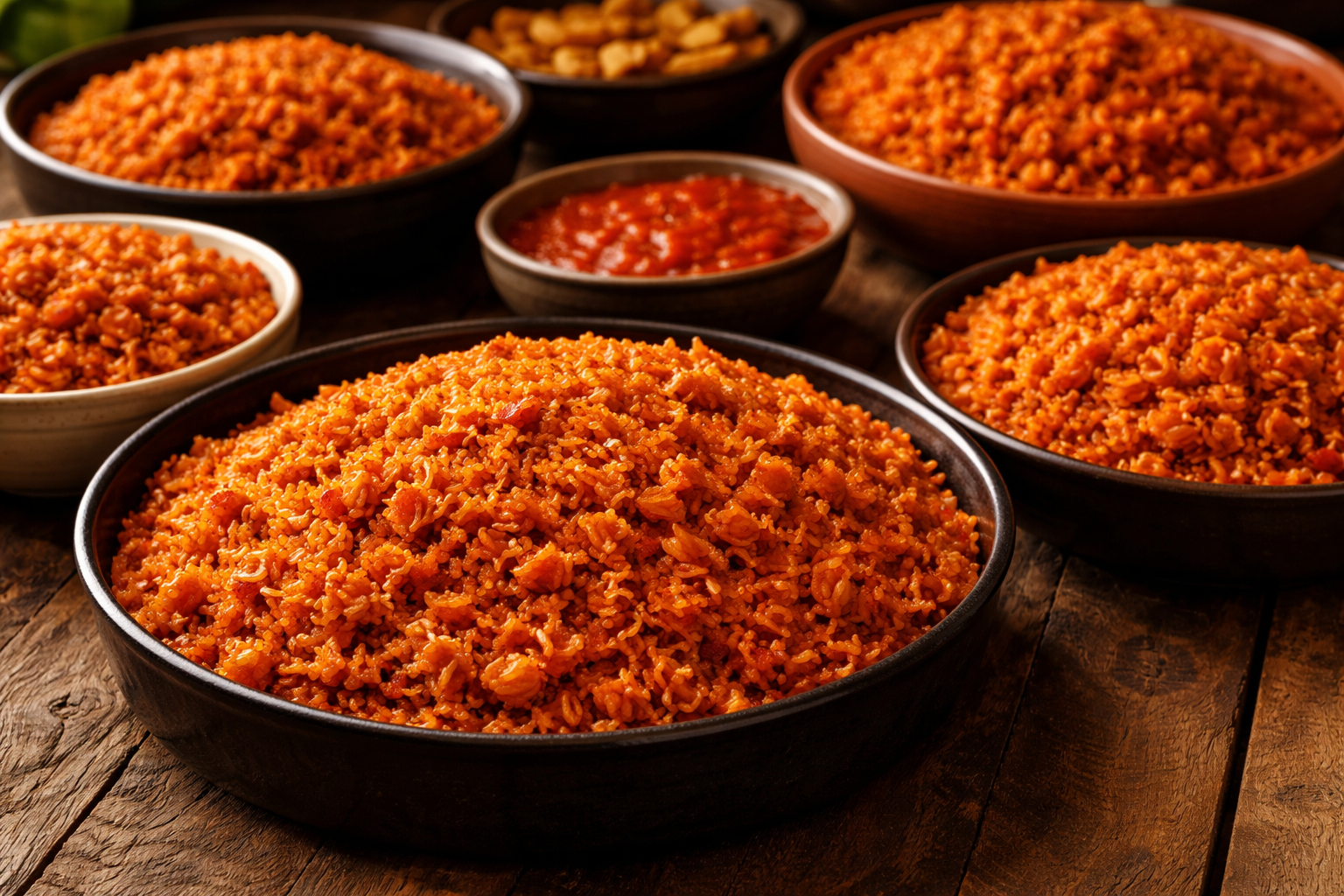
Ghanaian Jollof Rice Recipe
 1 hr
1 hr
 Rice
Rice
 Main
Main
 Easy
Easy
Ingredients
- 2 cups long-grain parboiled rice
- 5 large ripe tomatoes (blended)
- 3 tablespoons tomato paste
- 1 large onion (chopped)
- 3 cloves garlic (minced)
- 1-inch ginger (grated)
- 1/4 cup vegetable oil
- 2 cups chicken stock
- 1 cup mixed vegetables (carrots, peas) (optional)
- 1 teaspoon curry powder
- 1 teaspoon dried thyme
- 2 bay leaves
- 1 teaspoon paprika
- 1/2 teaspoon white pepper
- 1 scotch bonnet pepper (optional, blended)
- 1 teaspoon salt to taste
- 1 teaspoon sugar (optional, balances acidity
- 500g chicken (optional, for serving)
Directions
Step 1 : Prepare the Base Ingredients
Start by washing all fresh ingredients thoroughly under clean running water to remove dirt and impurities. Chop the onions finely, mince the garlic cloves, and grate the ginger until smooth and aromatic. Blend the fresh tomatoes together with the scotch bonnet pepper to form a smooth, rich puree that will form the base of the jollof sauce. Ensure the mixture is lump-free for a silky texture. Measure out all spices and ingredients beforehand to streamline the cooking process. This preparation stage is crucial for efficiency and ensures that once cooking begins, everything flows smoothly without interruptions or overcooking risks.
Step 2 : Parboil the Rice
Rinse the long-grain parboiled rice under cold water several times until the water runs clear, removing excess starch that could make the rice sticky. Place the rice in a pot and add water just enough to cover it slightly. Bring it to a boil and allow it to cook for about 5 minutes until partially softened but not fully cooked. Drain the water immediately and set the rice aside. This process ensures the grains remain firm and separate during the final cooking stage. Proper parboiling is key to achieving the signature fluffy texture of authentic Ghanaian Jollof rice.
Step 3 : Heat the Oil and Fry Onions
In a large, heavy-bottomed pot, heat the vegetable oil over medium heat until it becomes slightly shimmering but not smoking. Add the chopped onions and sauté them gently, stirring frequently to prevent burning. Cook the onions until they turn translucent and release their natural sweetness, which forms a flavorful foundation for the dish. This step enhances the depth of the jollof sauce and creates a rich aroma that defines the cooking process. Avoid rushing this stage, as properly softened onions contribute significantly to the final taste and overall richness of the Ghanaian Jollof rice.
Step 4 : Add Tomato Paste and Fry
Add the tomato paste into the sautéed onions and stir continuously to combine. Allow the paste to fry in the oil for about 5 to 7 minutes, stirring frequently to prevent burning. This frying process caramelizes the tomato paste, reducing its acidity and enhancing its deep, rich flavor. You will notice the color darkening slightly and the oil beginning to separate from the mixture, which is a good sign. Properly frying the tomato paste is essential for achieving the authentic smoky taste associated with Ghanaian Jollof rice and ensures the sauce has a bold, concentrated tomato flavor.
Step 5 : Add Blended Tomato Mixture
Pour the blended tomato and pepper mixture into the pot with the fried tomato paste and onions. Stir well to combine all elements evenly, ensuring a smooth consistency. Allow the mixture to cook uncovered on medium heat for about 15 to 20 minutes, stirring occasionally to prevent sticking. During this time, excess water will evaporate, and the sauce will thicken significantly. This stage is critical for developing the rich, concentrated base that defines Ghanaian Jollof rice. The sauce should reduce until it becomes thick and the oil begins to rise to the surface, indicating readiness.
Step 6 : Add Aromatics and Spices
Once the sauce has reduced, add the minced garlic, grated ginger, curry powder, thyme, paprika, white pepper, bay leaves, and salt. Stir thoroughly to incorporate all spices evenly into the sauce. Allow the mixture to cook for another 5 minutes so the spices can release their full aroma and flavor into the base. This step builds the signature complexity of Ghanaian Jollof rice, combining warmth, depth, and subtle heat. The kitchen should now be filled with a rich, inviting aroma that signals the dish is progressing perfectly toward its final stage.
Step 7 : Add Stock and Adjust Flavor
Pour in the chicken stock gradually while stirring to maintain a smooth consistency. Taste the sauce and adjust seasoning as needed by adding salt or a small amount of sugar to balance acidity. Allow the mixture to simmer for a few minutes to fully integrate the flavors. The stock enhances the richness and adds depth, making the jollof rice more savory and satisfying. At this stage, the sauce should have a balanced taste with a slight tanginess and a rich, spicy undertone. Proper seasoning here ensures the final dish is flavorful throughout every grain of rice.
Step 8 : Add Parboiled Rice
Carefully add the parboiled rice into the sauce, ensuring even distribution across the pot. Stir gently to coat every grain with the rich tomato mixture without breaking the rice. The goal is to allow each grain to absorb the flavorful sauce while maintaining its structure. Spread the rice evenly and ensure the liquid level is just enough to cook the rice without making it mushy. This stage is crucial for achieving the perfect texture, where the rice is neither too dry nor overly soft. Proper mixing ensures uniform flavor throughout the dish.
Step 9 : Cover and Steam Cook
Reduce the heat to low and cover the pot tightly with a lid or foil to trap steam inside. Allow the rice to cook slowly for about 20 to 25 minutes without stirring frequently, as this can break the grains. The steaming process allows the rice to absorb all the flavors while cooking evenly. Check occasionally to ensure it does not burn at the bottom, adding a small amount of water if necessary. This step is essential for achieving the iconic texture of Ghanaian Jollof rice—soft, fluffy grains infused with deep, smoky flavor.
Step 10 : Add Vegetables (Optional)
If using mixed vegetables such as carrots and peas, add them during the final 10 minutes of cooking. Gently fold them into the rice to ensure even distribution without disrupting the structure of the grains. The vegetables add color, texture, and a slight sweetness that complements the rich tomato base. This step is optional but highly recommended for a more balanced and visually appealing dish. Allow the vegetables to cook through while the rice continues steaming. Proper timing ensures they remain tender yet firm, enhancing both taste and presentation of the final meal.
Step 11 : Final Steam and Flavor Development
Allow the rice to cook for an additional 5 to 10 minutes on very low heat to develop the characteristic smoky flavor known as “party rice.” Avoid stirring too much during this stage, as the slight toasting at the bottom contributes to the authentic taste. This process intensifies the flavors and gives the dish its signature depth. Ensure the rice is fully cooked and fluffy before turning off the heat. Proper final steaming ensures every grain is infused with the rich sauce, creating a well-balanced and deeply satisfying Ghanaian Jollof rice experience.
Step 12 : Serve and Enjoy
Turn off the heat and let the jollof rice rest for about 5 minutes before serving. Fluff the rice gently with a fork to separate the grains and release steam. Serve hot with grilled or fried chicken, salad, or fried plantains for a complete Ghanaian meal. The dish should have a vibrant color, rich aroma, and perfectly cooked texture. Enjoy the balance of smoky, spicy, and savory flavors that make Ghanaian Jollof rice a beloved staple. This recipe ensures a delicious and authentic experience suitable for family meals or special occasions.